


M. R. Lalu
The BJP declared one month of ‘Seva’ as it geared up for festivities celebrating the Prime Minister’s 76th birthday. Being the first to hold the high office from outside the Nehru dynasty for such a long period, Narendra Modi, as Prime Minister, has surpassed numerous records set by his predecessors. His prominence, dominance and eloquence throughout his 12-year tenure have challenged conventional notions of anti-incumbency.
The agitations that his political opponents have launched across India, with the principal aim of dethroning Modi, are not receiving much oxygen. Though their frustration is turning into an increasingly aggressive campaign that appears directed against India itself, Modi continues to pursue his vision and the basic doctrine on which he and his party have been navigating the country — India’s civilizational nationalism.
His transformation from an RSS functionary to a par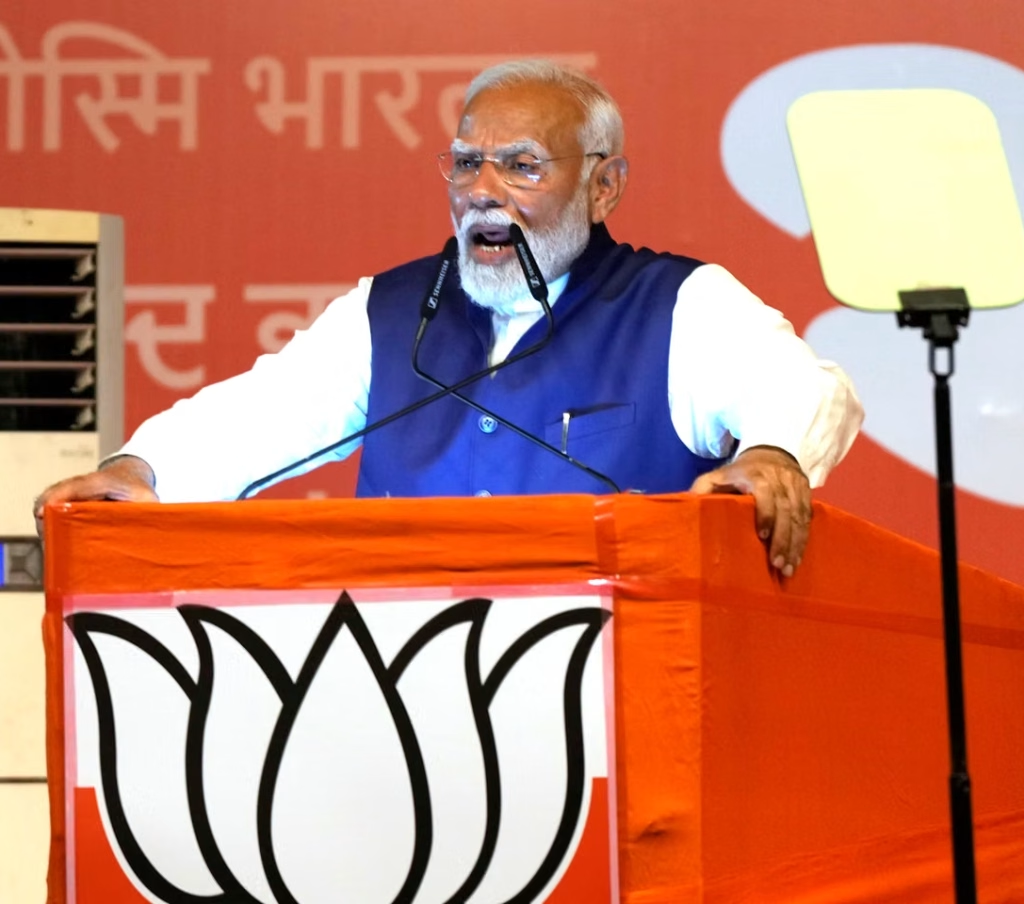 ty organiser, Chief Minister and then the people’s Prime Minister has involved continuous challenges, faced with expertise and ideological conviction. This defines the man in Narendra Modi better than the politician in him.
The ideological conviction with which he handled situations was his strongest defense. The volatility of the situations he faced could have destroyed people in his place, making a return almost impossible. With a commanding presence and his sharp, penetrating eyes demanding perfection and precision in initiatives and their execution, Modi remained courteous while facing repeated criticism against him and his government.
Nothing over the last 25 years could deter him in office as Chief Minister and Prime Minister. Modi was the first among the common people of India to win an absolute majority since 1984, entering Parliament with the humility of a layman, the tranquility of a saint and the authenticity of an administrator. He was humble because he represented the common masses of India. His tranquility was shaped by his training in the nationalist echelons of the RSS. He was authentic in administration because he had led Gujarat through some of its most challenging moments of social upheaval following the Godhra train carnage and subsequent riots.
He also broke systemic delays when laying frameworks for reforms and their time-bound execution. “The Outsider” tag at the beginning and the target of intense criticism through more than a decade in Delhi; his story has already entered the annals of Indian history.
The most significant part of his story is the journey of a chaiwala to a champion and game changer in Indian politics, which gave a nationalistic ideology greater space after decades of political subjugation.
There was a time when his controversial record as Chief Minister of Gujarat was used to challenge his political career, continuing up to 2014 and beyond. Today, Modi stands among the most popular global leaders. Through three consecutive terms, the narratives that initially vilified him have been challenged, while what his supporters describe as the double standards of the Western media and their counterparts in India stand exposed.
India’s successful journey under his stewardship has not been merely an exaggerated publicity campaign but a reality visible on multiple fronts. Twelve years in office, Modi continues to enjoy enormous support from the Indian electorate. He is regarded by his supporters as unique, incorruptible and unshakable. Women and children along the roads shower flowers in respect for their leader, some claiming to have “seen their God” and prostrating themselves before him. It is an expression of the support that a large section of India has extended to a leader they believe has transformed India into a credible and reliable global player.
What has changed about India since Modi’s arrival? His plans for the poor and downtrodden have lifted a large number of people out of poverty. The needs of the common man have been raised from the ramparts of the Red Fort by the Prime Minister himself. Multidimensional projects have been rolled out for financial stability, defense capabilities, international relations, education, infrastructure, social security, women’s empowerment and healthcare.
These initiatives have helped him retain popularity through subsequent terms. The man who was once demonized, shunned, dismissed and condemned is now seen as someone who can tell the world what India can contribute and how the world can progress when wars and destruction turn parts of it into hellscapes.
For Modi, the Upanishadic maxim “Vasudhaiva Kutumbakam”, or “the world is one family”, is not merely a glossy catchphrase but an actionable doctrine. Under his leadership, India is on a journey to actualize this principle for global peace while attaining its rightful stature internationally by the centenary of its independence.
🌐 Stay Connected with The Avenue Mail
Get the latest news and breaking updates delivered instantly to your feed.
🟢Join our WhatsApp Group: Click here to join
📢 The Avenue Mail: Your trusted source for real-time news.
