


India is bracing for a fresh wave of tariff pressure from the United States as President Donald Trump’s administration prepares to impose higher import duties on 16 major economies, including India, over allegations of unfair industrial subsidies. According to reports from The Wall Street Journal and the BBC, the proposed measures target countries accused of providing extensive government assistance to domestic industries—a practice Washington claims allows foreign manufacturers to produce goods at artificially low costs, flood global markets, and undercut American businesses. Alongside India, the impending tariffs are set to hit some of the United States’ largest trading partners, including China, the European Union, Japan, South Korea, and Mexico.
The timing of this escalation is particularly sensitive for New Delhi, as Indian and American officials are currently engaged in delicate negotiations to finalize a bilateral trade deal. For India, navigating these renewed trade headwinds adds significant complexity to ongoing discussions aimed at securing favourable market access and resolving existing commercial friction with Washington.
The upcoming tariff action stems from a months-long “Section 301” investigation initiated by the White House in March. That probe was launched in the wake of a major legal setback for the administration, when the US Supreme Court struck down President Trump’s sweeping “Liberation Day” tariffs—originally unveiled in April 2025 shortly after his return to office—ruling them illegal. Despite that judicial rebuke, the administration has remained steadfast in its protectionist trade agenda, which Trump has consistently championed as a vital tool to revitalize domestic manufacturing and create American jobs. Following the court’s decision, US Trade Representative Jamieson Greer maintained that foreign overproduction continues to displace American industry and deter domestic investment. Greer is expected to formally announce the findings of the Section 301 investigation as early as this week, though officials familiar with the deliberations have cautioned that the exact timeline remains fluid.
Under the new framework, the targeted jurisdictions will not face a uniform levy; instead, individual import tax rates will vary depending on the bilateral trade deals those nations have previously negotiated with the Trump administration. However, critics of the White House’s approach continue to warn that broad-based import taxes ultimately drive up costs for American consumers and risk destabilizing the broader global economy.
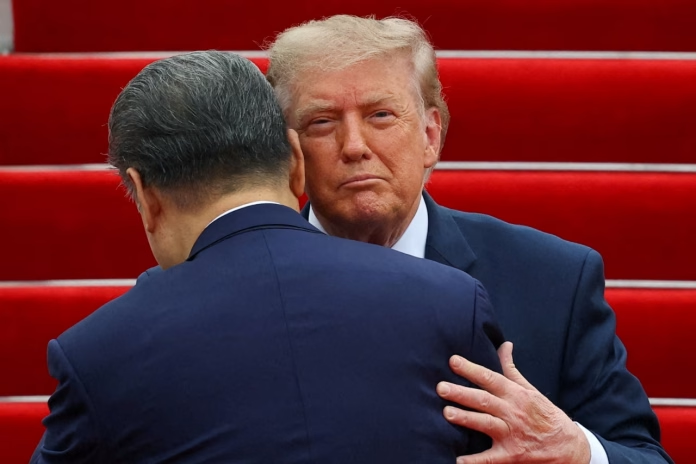
Beyond its implications for India and other US allies, the impending announcement threatens to further inflame trade tensions between Washington and Beijing. The world’s two largest economies remain locked in a protracted commercial dispute, with an existing interim trade truce set to expire on January 10. Although President Trump and Chinese President Xi Jinping met last week in Shenzhen, the two leaders failed to fully resolve their differences. Ahead of that summit, Washington accused Beijing of falling short on commitments made during their earlier October 2025 meeting in South Korea, specifically citing shortfalls in Chinese purchases of US agricultural goods, as well as issues surrounding rare earths and other critical minerals.
In a sign of cautious manoeuvring ahead of the US tariff announcement, Beijing moved on Tuesday to ease immediate supply chain anxieties by extending the suspension of an export ban on critical minerals—including gallium, germanium, and antimony—until January 27. Had China not intervened, the restrictions would have taken effect this Friday. Nevertheless, with Washington poised to unveil its latest Section 301 duties, India and the rest of the world’s major trading powers face renewed uncertainty in an increasingly fragmented global trade landscape.
🌐 Stay Connected with The Avenue Mail
Get the latest news and breaking updates delivered instantly to your feed.
🟢Join our WhatsApp Group: Click here to join
📢 The Avenue Mail: Your trusted source for real-time news.
